

Surakarta, October 16, 2024 — The rapid development of Artificial Intelligence (AI) is increasingly being felt in the fields of accounting and research. This was conveyed by Emmeli Runesson, Ph.D., in a public lecture titled “AI and Machine Learning in Accounting Research,” organized by the Accounting Study Program, Faculty of Economics and Business, Universitas Muhammadiyah Surakarta (UMS).
The event, attended by UMS accounting lecturers, served as an important forum to broaden academics’ understanding of how AI can be utilized in both accounting practice and research.
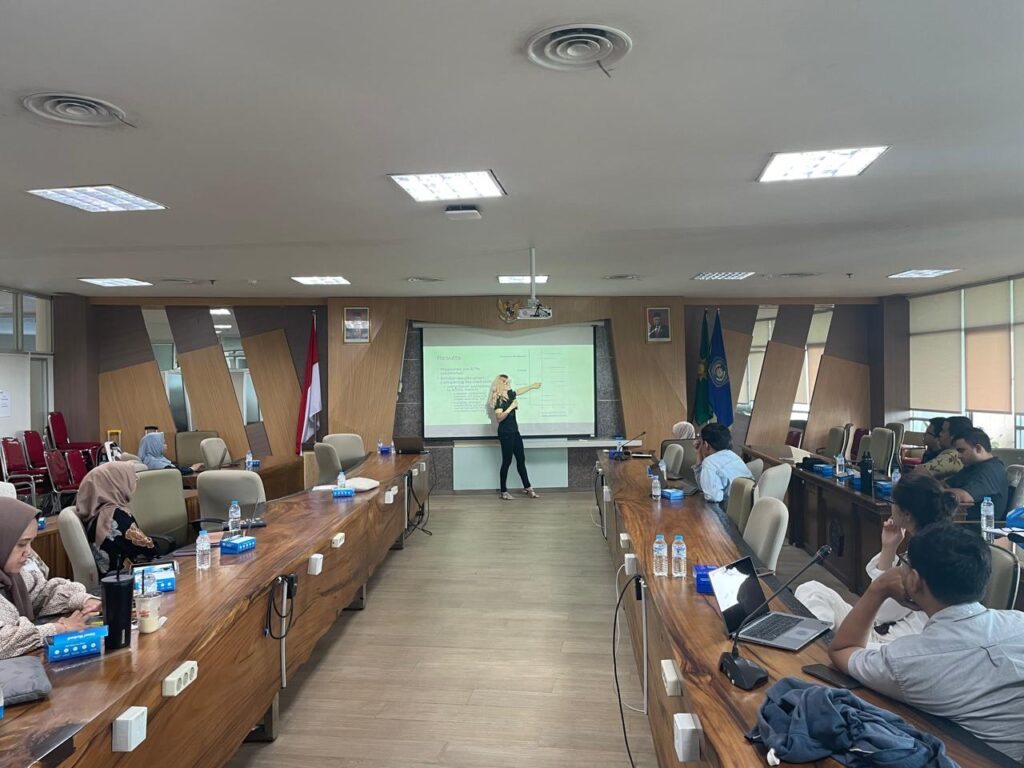
In her presentation, Runesson explained that AI is no longer merely a futuristic concept but has become a tangible part of professional practice and research. “Artificial intelligence is often seen as being at the forefront of computer intelligence. However, at its core, AI is machine intelligence that can learn, adapt, and assist humans in decision-making,” she said.
She highlighted the differences between classical AI and modern AI. Classical AI operates through symbolic logic and rule-based algorithms, such as expert systems or mathematical computations. However, this model has limitations when dealing with unstructured data and uncertainty. In contrast, modern AI—through machine learning (ML), deep learning, and natural language processing (NLP)—is capable of analyzing big data, recognizing patterns, and even generating text that resembles human language.
Furthermore, Runesson described the application of AI in accounting and auditing practices. According to her, AI does not necessarily eliminate the role of accountants but instead presents new challenges for the profession. “Routine tasks such as bookkeeping will become increasingly automated, but this in turn requires accountants to enhance their analytical, interpretive, and decision-making skills,” she explained.
In the realm of research, she emphasized the importance of using machine learning for accounting data analysis. Methods such as supervised learning (regression, classification), unsupervised learning (clustering, topic modeling), and generative AI are now being used to analyze sustainability reports, annual reports, and even corporate social media content.
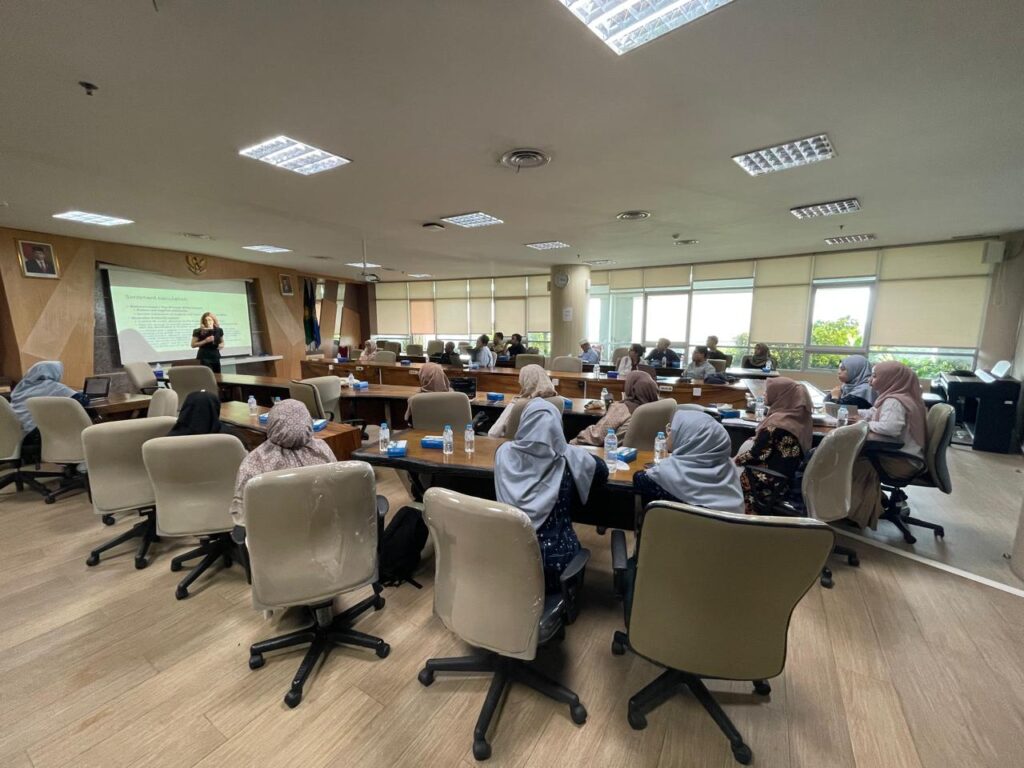
Runesson also discussed her latest research on sentiment analysis in local government financial reports in Sweden. The study combines dictionary-based analysis methods with generative AI models. The results show that the tone of annual reports can influence media coverage as well as public perceptions of the government’s financial performance.
Concluding her session, Runesson encouraged academics to view AI not merely as a tool for automation but as a research instrument that opens new opportunities for understanding the behavior of organizations, markets, and society. “We need to learn how to engage in dialogue with AI—not to replace humans, but to expand our intellectual capacity,” she concluded.